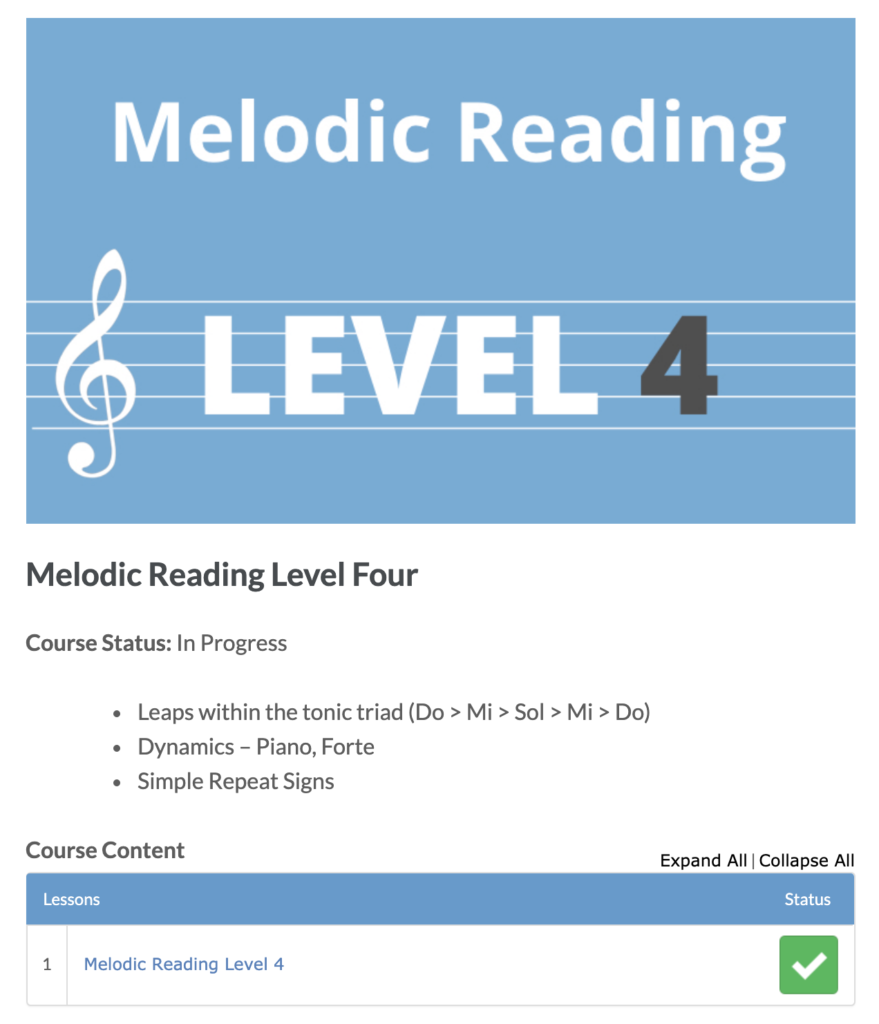
Practice Online for Free!
* Immediately after purchase you’ll be taken to a secure page where you can download the book and accompanying audio files.*
Benefits for Teachers:
- Reproducible! Make as many copies as you need for your students
- 180 examples in each book
- Quizzes for each level
- Quick and Easy to Grade
- Instructional materials and Choral Glossary included
- Audio Answer Files Included!
When I first started teaching, there were two things I really wanted to do well. I wanted to make sure that my students could read music, and that they were assessed and graded fairly. Frequently I would ask other teachers how they handled sight singing and grading.
“How do you get your choir to read music? What’s your method?”. I was surprised how many times I heard:
“Get more band kids to join chorus!”
But what about the kids who aren’t in band? I wanted to make sure they learned to read too. My next question was usually, “What’s your grading technique?”. Some methods seemed very cumbersome and time consuming, and some seemed to be based mostly on student behavior.
As I searched for sight singing method books and researched different grading techniques, I finally decided to just put something together myself that met both of my goals. That’s what led me to create the Chorus Workbook I still use today.
Now, I knew that I did not have a lot of time to spend correcting, and I didn’t have a budget that would allow me to purchase a sight singing book for every student. So that’s why “The Practice Room” is reproducible, and easy to use.
In the book you will find three major areas:
Rhythmic Reading
Sight Singing
Two-Part Harmonic Sight Singing
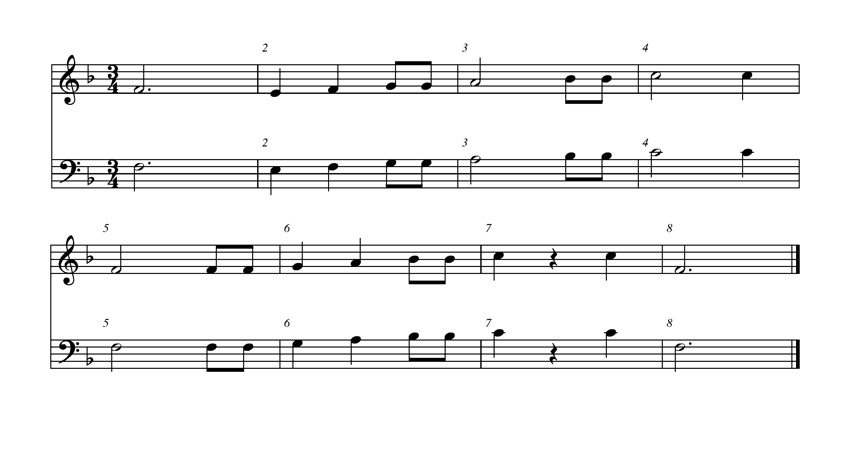
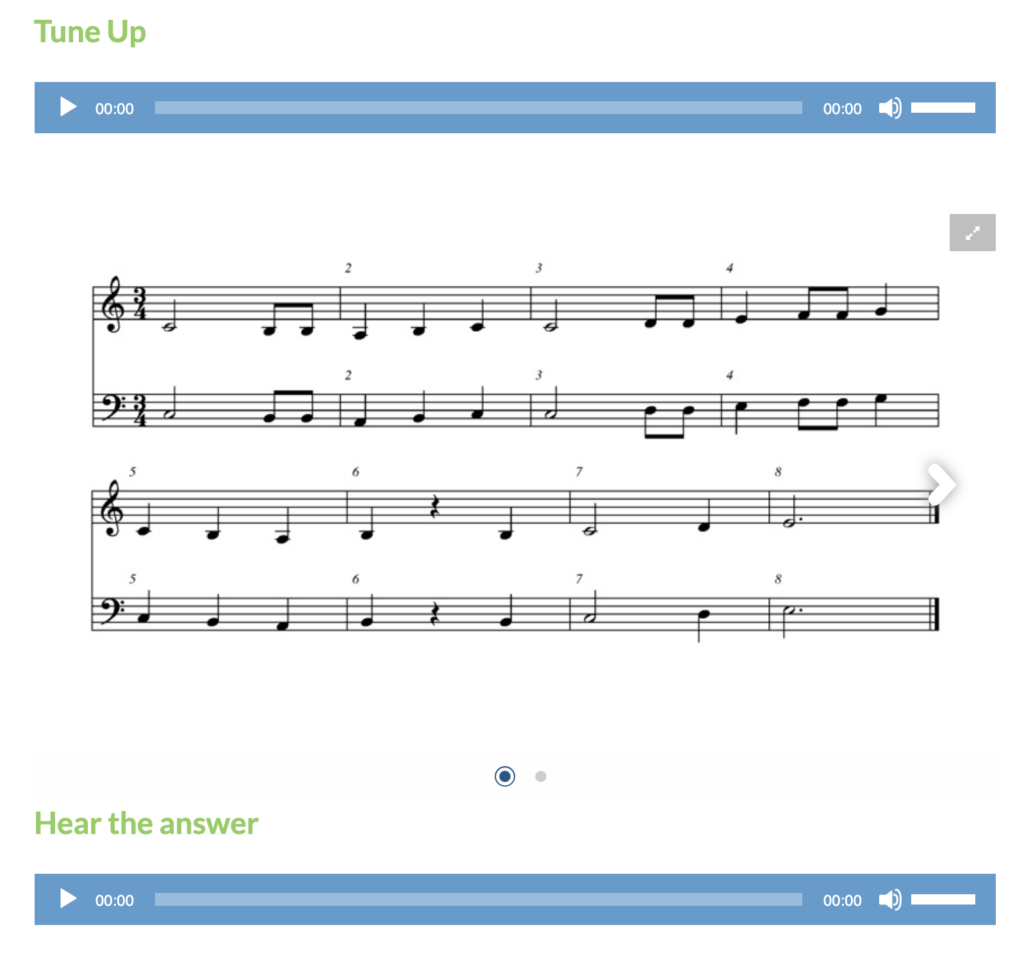
Each area has twenty examples. Audio files containing a warm-up pitch, a steady beat and an answer file for each example are included with the book.
The book also includes:
- Instructional materials to help you explain concepts
- Choral Glossary of common terms seen in choral music
- Vocabulary Quizzes and a few other basic quizzes to check learning
- Generic Song Sheets you can use to quiz students about songs you are currently learning
- Rehearsal and Concert Reflection Sheets so students can self critique their own work
- Workbook Check Sheets to grade the workbook
- Write the note names under each note
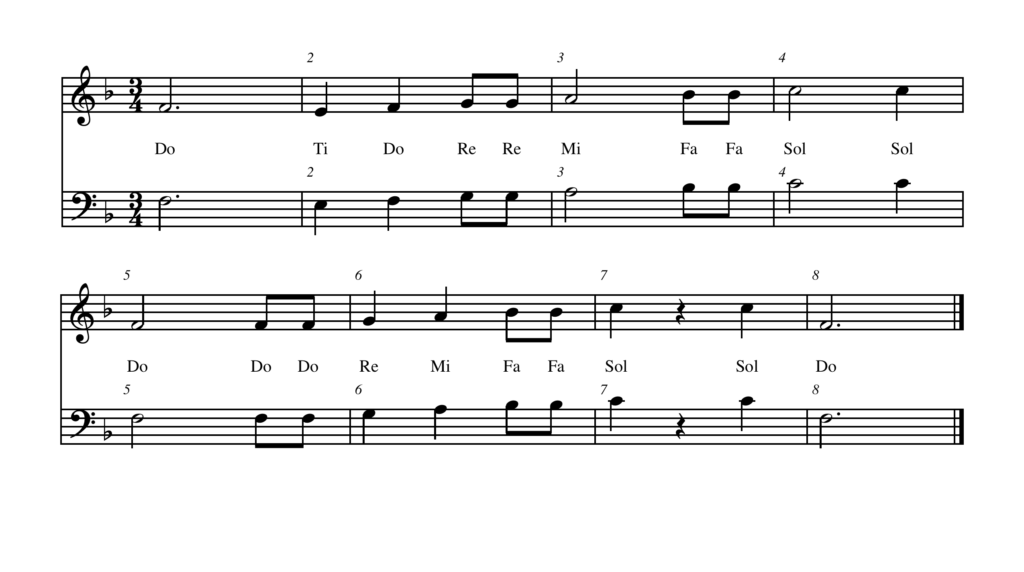
- Write the sol-fege under each note
- Write the rhythmic counts under each note
- Did they complete each example as assigned?
- Did they demonstrate comprehension of the concepts?
- It legitimized my class in the eyes of my students. They could see I was asking for academic work from them and that made them treat it more like a “real” class.
- It gave me a concrete assessment tool. I could easily see what they were learning.
- It is cheap and disposable. At the end of the year, I give students the option to keep it, otherwise we recycle them away and they start with new books the following fall.
Here’s how I used the book in my classroom.
I ran off a copy of the book for every student. My school system had a binding machine that I used to bind each book together. They each had their own copy with their name on it and they were responsible for it. Their work in the workbook counted as a part of their grade in their chorus class.
Each day we did one example from the book immediately following warm-ups. Students were asked to do three things:
This went very quickly after we developed a daily routine. They knew which example was next and often students would begin the assignment as I was taking attendance.
After each ten examples in the workbook there is a check sheet with a grading rubric. I collected the workbooks once we had completed ten examples and graded them based on two things:
Because I kept things simple, grading was very quick. I could tell at a quick glance who demonstrated comprehension and who didn’t. It was also easy to check for completion.
You may use this book anyway you like and you are granted permission with purchase to copy what you need for your students.
The workbook provided many immediate benefits for my choral program.
But most importantly…
Their sight singing improved ten-fold.
I began to see huge gains in their level of self confidence with regards to reading music. They learned music faster, and asked better questions in class. Instead of questions like, “I’m lost.”, I was asked, “The altos are missing the jump from the G to the Bb in measure 27. Can you go over that again?”
More students felt comfortable auditioning for regional and state wide festivals because they were not afraid of the sight singing component of the auditions, and more students were accepted into these festivals.
I even had students contact me after they had graduated to tell me they were grateful they had the workbook, because what they learned led to a successful college audition.
So please use this with my best wish that it works well for you. If you have feedback, suggestions or comments, please feel free to contact me at:
contact [at] thepracticeroom [dot] net